Used Subaru Outback Buying Guide

Shopping for a used Subaru Outback means choosing between several generations that can feel surprisingly different behind the wheel. Understanding Subaru Outback generation differences can help narrow the search, whether you want an efficient daily driver, a used Outback XT with extra power, or simply a practical pre-owned AWD wagon for year-round driving. Age and mileage only tell part of the story, though. Service history matters too, particularly when considering Subaru CVT maintenance and other generation-specific needs.
Key Takeaways:
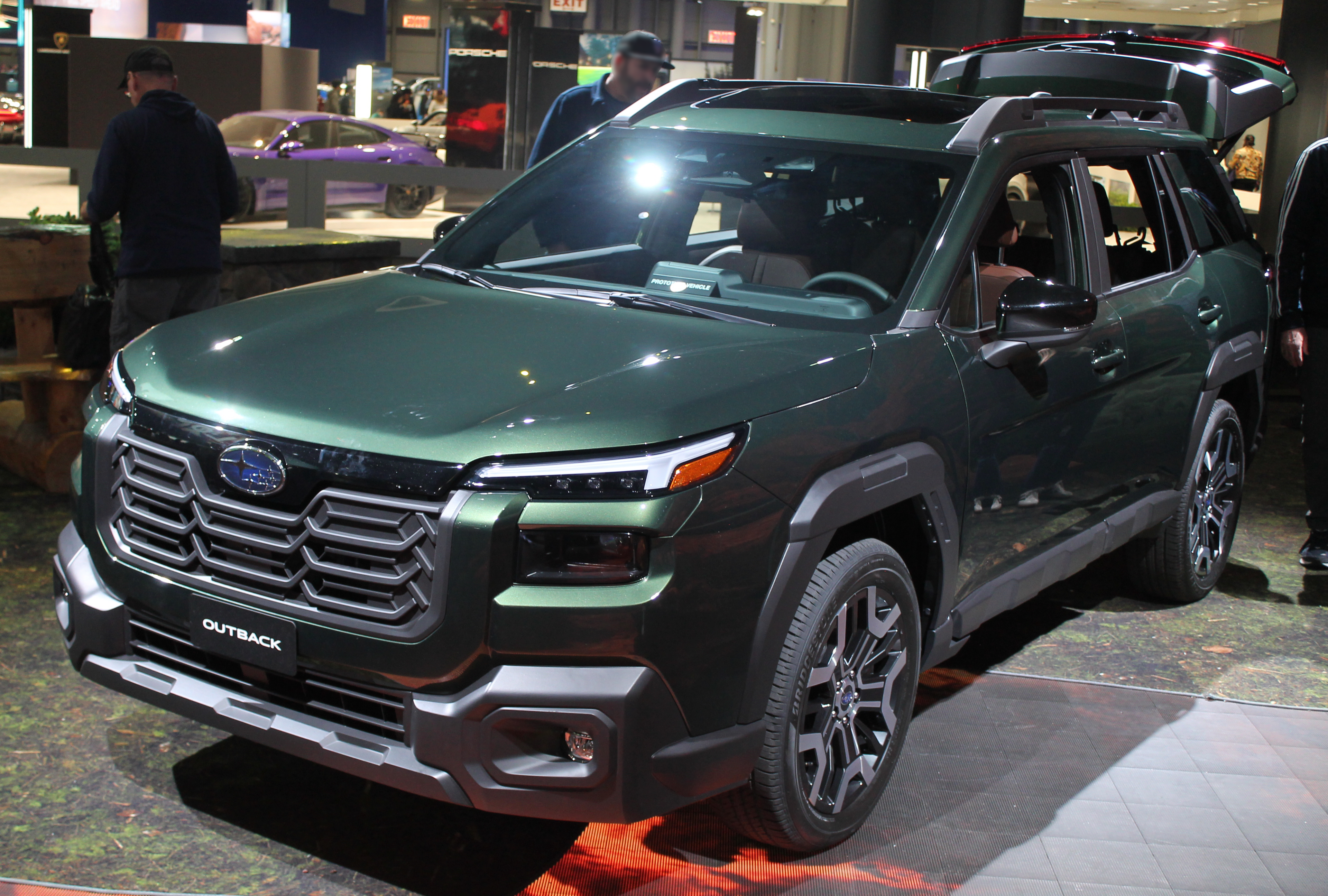
- The Outback combines wagonlike road manners with SUV cargo space, ground clearance, standard AWD, and family-oriented versatility.
- Model years differ substantially in touchscreen technology, EyeSight availability, cabin design, safety equipment, and convenience features.
- Powertrain choices include the common 2.5-liter engine, older 3.6R models, and newer turbocharged XT configurations.
Which used Subaru Outback generation should you buy?

The fifth-generation Subaru Outback (2015-2019) is arguably the sweet spot for used buyers, combining relatively modern safety equipment with proven mechanicals and significantly lower prices than newer examples. This generation moved beyond many of the head-gasket problems associated with older Subarus, while available EyeSight driver-assistance technology brought features such as adaptive cruise control and pre-collision braking. Buyers can choose between the economical 2.5-liter four-cylinder and the stronger 3.6-liter six-cylinder, with later 3.6R models particularly appealing to drivers who want more effortless acceleration and towing capability. Depending on mileage, trim, condition, and location, fifth-generation examples commonly occupy the mid-teens to low-$20,000 range.
The sixth-generation Outback (2020-2025) is worth considering for buyers willing to spend more for newer technology, improved refinement, and available turbocharged power, although later examples avoid some of the complaints associated with the redesigned 2020 model. At the other end of the market, a well-maintained third-generation 2005-2009 Outback, particularly a late-production example, can still make an inexpensive used option, but age-related repairs and head-gasket history deserve close inspection. The 2010-2014 fourth generation requires more careful shopping, particularly around 2013-2014 examples where CVT and oil-consumption concerns can complicate ownership. For most buyers trying to balance price, equipment, and dependability, 2015-2019 remains an especially compelling Outback generation.
Is the standard Outback or turbocharged Outback XT better?

The standard Subaru Outback 2.5L and turbocharged Outback XT suit different types of buyers. The naturally aspirated 2.5-liter four-cylinder produces about 182 horsepower in recent models and prioritizes fuel economy, affordability, and mechanical simplicity. Its roughly nine-second 0-60 mph performance is adequate for normal commuting, although acceleration can feel strained when passing, climbing steep grades, or carrying a full load. For buyers primarily concerned with operating costs and who rarely tow, the standard engine is generally the more sensible used Outback choice.
The Outback XT's 2.4-liter turbocharged engine produces 260 horsepower and 277 lb-ft of torque, transforming the Outback's performance and dropping 0-60 mph times to around six seconds. The additional torque is especially useful at higher elevations, with heavy cargo, or when towing, with properly equipped XT models rated for up to 3,500 pounds. That capability comes with higher purchase prices, greater mechanical complexity, and worse real-world fuel economy, particularly around town. For ordinary commuting, the 2.5L provides better economy and value, while the XT is worth the premium for drivers who regularly tow or simply want an Outback that doesn't treat highway merging as a long-term project.
| What to Compare | 2005-2009 Outback | 2010-2014 Outback | 2015-2019 Outback | 2020-2025 Outback |
|---|---|---|---|---|
| Generation | Third | Fourth | Fifth | Sixth |
| Best For | Low-budget shoppers comfortable with an older vehicle | Affordable newer-style Outback with careful shopping | Best overall used-value balance | Newer technology, refinement, and performance |
| Common Engines | 2.5L flat-four, turbo 2.5L XT, 3.0L six-cylinder | 2.5L flat-four, 3.6L six-cylinder | 2.5L flat-four, 3.6L six-cylinder | 2.5L flat-four, 2.4L turbo XT |
| Transmission | Manual or automatic, depending on configuration | Manual, CVT, or automatic depending on engine/year | CVT | CVT |
| AWD | Standard | Standard | Standard | Standard |
| EyeSight Availability | No | Limited to later models | Available and increasingly common | Standard on most configurations |
| Main Advantage | Traditional wagon character and low purchase prices | More space and comfort than earlier models | Modern enough without newer-model pricing | Best technology and available turbo performance |
| Primary Inspection Concern | Head gaskets, timing belt, rust, oil leaks | Oil consumption, CVT condition, wheel bearings | CVT history, wheel bearings, electronics | Infotainment, CVT behavior, electronics, recall history |
How reliable is a high-mileage Subaru Outback?
A high-mileage Subaru Outback can still be a worthwhile purchase, with properly maintained examples frequently reaching 200,000 to 250,000 miles and some surviving beyond 300,000 miles. Once an Outback passes roughly 150,000 miles, however, maintenance history becomes far more important than the number glowing on the odometer. Older, pre-2015 models require particular scrutiny for head-gasket problems, oil leaks, timing-belt service on applicable engines, wheel bearings, and other age-related repairs. A cheap 180,000-mile Outback with meticulous records can therefore be a considerably safer purchase than a neglected 120,000-mile example whose maintenance history consists primarily of optimism.
For high-mileage shopping, the 2015-2019 fifth generation is particularly attractive because its engines use timing chains and generally avoid the notorious head-gasket reputation of much older Subaru four-cylinders. The available 3.6-liter six-cylinder also has a strong reputation for durability, although any high-mileage engine should be checked for oil consumption and leaks. CVT condition is crucial, so buyers should look for evidence of appropriate transmission-fluid servicing and test for shuddering, hesitation, or abnormal noises. Before purchasing any high-mileage Outback, a professional pre-purchase inspection should include the CVT, cooling system, suspension, wheel bearings, underbody corrosion, and fluid leaks.
Summary
Still curious to know which year of the Outback makes the most sense for you? Car2Sell East Windsor, NJ's selection of used Subaru models represents a full spectrum of well maintained examples, so whether an older base model or a newer mid-to-high range trim makes more sense for you, we can guarantee